

Carlyle Gateway August ‘26 Hive Update

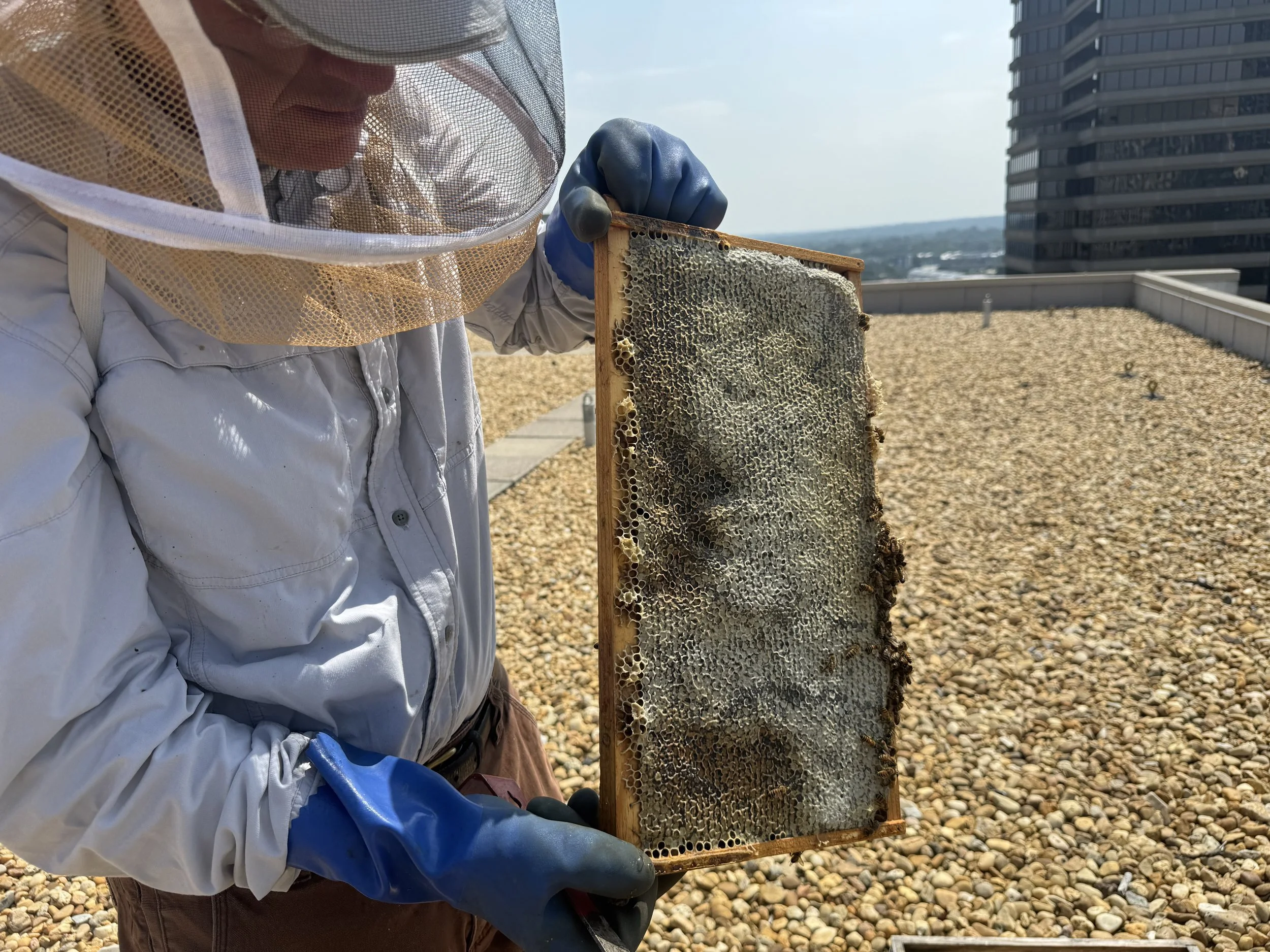
Meet our new Lead Beekeeper, Pat!
“It is great to be part of the Up Top Acres family all supportive of farming and giving back to the environment. I am joining the UTA Team as the new beekeeper. I want to congratulate James Sleigh for his work in keeping the bees and wish him the best in pursuing his career goals.
By way of background, my beekeeping experience began in the early 1980s, when I was snowbound during a major Northeast storm. A beekeeper welcomed me in for the night, and the next morning I saw his snow-covered hives in the backyard. That moment sparked my fascination with honey bees and the important work they do. Today, I manage more than 50 colonies across Northern Virginia, including Arlington, Fairfax, and western Loudoun County. My work includes pollinating a berry farm, selling honey and wax at local farm stands and markets, and providing educational experiences for children and adults. I look forward to meeting you and caring for your bees in support of our environment.”
Do you know the difference between worker honey bees during the spring and summer and worker bees who survive the winter?
Honey bees during the spring and summer typically live between 45 and 60 days. Because of all the different activities of raising brood, caring for the brood, and foraging during the height of the honey flow, they have shorter lives. Conversely, honey bees raised in late summer to early fall are known as winter bees. These bees retain a great percentage of their fat bodies and consequently have a longer lifespan, another essential element for the colony to survive the colder winter months ahead. Their thicker fat bodies also help insulate them and their hive mates during the winter.
Busy August
It is great to be the newest member of the Up Top Acres Team taking care of the honey bees. A big thank you to James Sleigh for a successful handoff of the colony at 333 John Caryle Drive. Prior to James heading back to school, he and Charlotte Duke harvested honey in mid-August so look for honey delivery soon!
My first hive inspection of the two colonies yielded positive signs for this time of the year. Both colonies had 6 frames of brood (eggs, larvae, capped brood) a good sign for this time of the year in preparing for the winter months ahead. I also tested the colonies for Varroa mites, the number one pest that can cause a colony to perish from a decline in bee population. The mites feed on the fat bodies of adult bees and brood and vector harmful viruses in the process. The good news is that when I tested for mites, both colonies were below 1% for 300 bees tested.
As we prepare for winter, the goal is to ensure the colony has 40 to 60 pounds of honey, which is needed in our region to make it through the colder months. On my next visit, I continue to evaluate that status of resource for the months ahead. While honey and pollen are important for winter survival, the colony also needs a large cluster of bees to stay warm through cold weather that why keeping the mite load down below 1% is key.
Good news! All of the honey has been extracted from the frames and is being jarred. We should have the jars ready for you by next month. Stay tuned for updates!